 Français
 English
 Allemand





































































PATCHOULI FRAGRANCES : The Secrets of an Iconic Ingredient
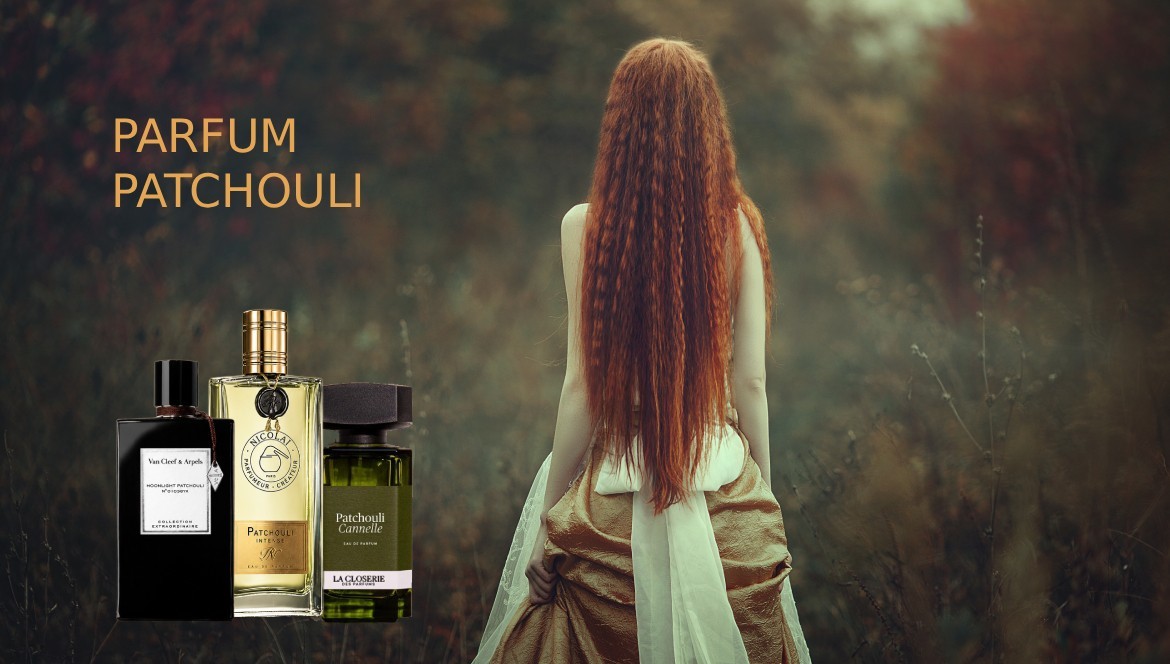
Some are passionate about it, while others prefer to steer clear of it. At Paris Parfums, we’re in love with it. Patchouli is one of those ingredients that leaves no one indifferent. It seduces over time, not on a whim. It’s like a lover who plays hard to get. It will take you a little while to discover all its facets.
Often reduced to its hippie heritage, patchouli nevertheless occupies a central place in perfumery. It appears in everything from historic creations to the most contemporary niche compositions.
It’s a legendary fragrance to wear in winter to warm your heart and body.
What is the origin of this leaf with its unmistakable scent? What facets does it reveal? How can you find a patchouli fragrance that suits you? This guide invites you to rediscover it without preconceived notions.
Before it became a fragrance, patchouli was a plantA plant native to Southeast AsiaPatchouli, or Pogostemon cablin, is a tropical shrub belonging to the Lamiaceae family, along with mint, basil, and lavender. Growing to over one meter in height, it is distinguished by its large, velvety leaves. Most of the patchouli used today in perfumery is grown in Indonesia and the Philippines. Its flowers are not used: all of its aromatic richness is concentrated in its leaves. How the Leaf Becomes an EssenceSurprisingly, the fresh patchouli leaf is almost odorless. It is only after a period of fermentation that the molecules responsible for its characteristic scent develop. After fermentation, the leaves are steam-distilled to extract the essential oil. The oil is then aged in barrels for several months: its bitterness softens while its profile becomes more rounded. A second distillation can finally produce more delicate, less camphor-like fractions, which are particularly sought after by perfumers. From Indian Fabrics to Hippie CulturePatchouli arrived in Europe in the 19th century via an unexpected route. To protect cashmere shawls shipped from India from moths, merchants wrapped them in patchouli leaves. The fabrics then absorbed the scent, which Europeans discovered as a result. Perfumers quickly embraced this scent. Over the course of the 20th century, patchouli became an essential component of several major fragrance families, notably chypres, leather scents, and oriental perfumes. Its image evolved in the 1970s, when the hippie movement adopted it as one of its emblems. It came to be associated with a powerful scent, sometimes considered overpowering. This reputation persisted for a long time, until modern creations began to reveal more subtle expressions of the fragrance.
What does patchouli actually smell like?Patchouli has a multifaceted scent profile. It first reveals a warm, woody note, reminiscent of the forest floor after rain or a damp cellar. Camphor-like, slightly medicinal accents then emerge, followed by an almost amber-like sweetness that develops throughout the day. Patchouli generally functions as a base note. It adds depth to the composition, supports the other ingredients, and enhances the fragrance’s longevity on the skin. As such, it is included in the formulas of many fragrances without always appearing in their names. Many iconic perfumes owe part of their identity to patchouli, including Guerlain’s Mitsouko, Thierry Mugler’s Angel, and Chanel’s Coco Mademoiselle, not to mention Réminiscence. In each of these, patchouli complements a distinct olfactory world, ranging from elegant chypre to spectacular gourmand notes. It is currently experiencing a resurgence, particularly in niche perfumery. Choosing it is a sure way to personalize your everyday scent.
Where does its remarkable longevity come from?Patchouli settles deep into the base of a fragrance because its molecules evaporate slowly. While citrus notes fade quickly, patchouli can remain detectable for hours, or even until the next day on clothing. Perfumers therefore use it to reinforce the structure and longevity of a fragrance, even when it remains subtle. Is patchouli feminine or masculine?Patchouli isn’t limited to any one gender: its character depends above all on the ingredients surrounding it.
Four Ways to Interpret PatchouliThese creations illustrate the many different facets that a single raw material can take on. Lovers of a bold, unapologetic patchouli will turn to Patchouli Intense by Nicolaï. This eau de parfum, available on our Paris Parfums website, opens with the freshness of lavender, mint, and cilantro, before diving into a spicy heart of geranium, rose, cinnamon, and incense. The base, where patchouli is expressed as both essence and absolute, lingers with tonka bean, tobacco, and amber. Patricia, the brand’s creator, puts it very elegantly: “I wanted Patchouli to be like a symphony where every note finds its balance—a raw and captivating harmony.” |
At the other end of the spectrum, Van Cleef & Arpels’ Moonlight Patchouli unveils a softer, powdery interpretation. Created by Sonia Constant, a renowned perfumer who loves to travel the world and personally selects the finest raw materials on-site—much to our delight. In this fragrance, she blends patchouli with the delicacy of powdery iris and rose, set against a velvety suede accord with leathery undertones. Explorer Extrême MontBlanc from the famous brand is a bold fragrance that pushes the classic character of its Eau de Parfum even further. This is where the renown of this raw material comes into play, lending the fragrance its distinctive style and reputation. With its fragrant trio, LA CLOSERIE presents patchouli in three distinct creations:
Choose two—wear one in the morning and the other in the evening for a beautiful harmony and wonderful longevity. |